In the field of medium-to-high power industrial drives, YE3-180M-4 18.5kW 3 phase induction motor is a key power configuration connecting small and medium-sized general-purpose equipment with heavy-duty production machinery. It is widely used in high-intensity applications such as mining conveying, building material grinding, chemical mixing, and large fans and pumps. Compared to 11kW and 15kW small-to-medium power motors, the 18.5kW model has stronger load-bearing capacity and continuous operation capability, capable of handling the industrial demands of high-frequency heavy loads and long-term continuous operation. Many companies have found significant price differences in the market for 18.5kW electric motors of the same power. Understanding the performance value through price differences and accurately controlling procurement costs has become a core issue in industrial equipment upgrades and maintenance planning. A deep analysis of the pricing logic and cost differences of 18.5kW motors can help companies balance high-power performance with cost-effectiveness.
The basic pricing of the YE3 Series YE3-180M-4 18.5kW motor stems primarily from the higher manufacturing costs and technological barriers of higher-power models. As an advanced industrial power equipment, the 18.5kW electric motor has a significantly larger core volume, copper wire winding quantity, bearing specifications, and heat dissipation system than small and medium power motors. The higher the motor power, the higher the quality requirements for core raw materials. The use of high-purity enameled copper wire, thickened cold-rolled silicon steel sheets, and high-strength cast iron bodies increases substantially. Fluctuations in the market prices of main materials such as copper and steel directly affect the overall basic cost of the machine. At the same time, the 18.5kW electric motor carries a larger load, requiring more precise winding processes, dynamic balancing calibration, and a full-area heat dissipation structure during production. The production process is more complex, and the yield control standards are more stringent. The manufacturing and quality inspection costs are significantly higher than those of conventional small power motors, which is the core reason why its base price is higher than that of 15kW and below models.
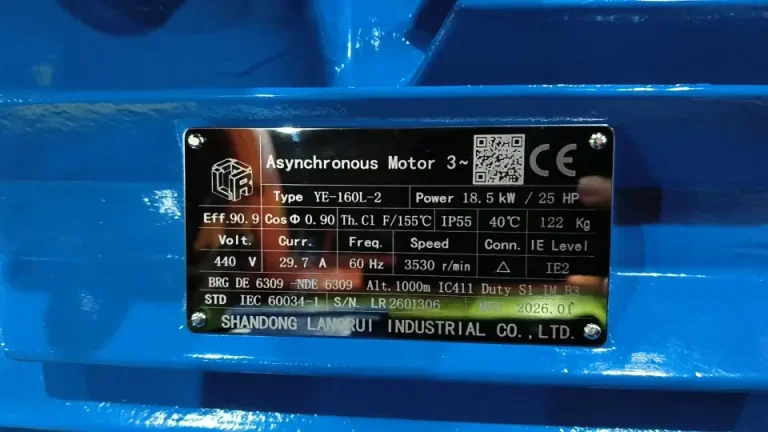
The core reason for the significant price difference in the market lies in the differences in the energy efficiency level and technical configuration of the models. Currently, 18.5kW motors on the market are divided into three main categories: standard models, high-efficiency energy-saving models, and ultra-high-efficiency permanent magnet models, with clear price gradients and significant performance differences. Ordinary asynchronous motors have a simple structure, use conventional materials, and have the lowest cost, but they suffer from high operating losses and low energy efficiency, making them only suitable for intermittent, low-load operations. High-efficiency IE3 standard motors optimize electromagnetic structure and heat dissipation design, reducing iron and copper losses and significantly improving operational stability, making them suitable for long-term continuous production. Their price is about 20% higher than ordinary models. Permanent magnet synchronous high-efficiency motors use rare-earth permanent magnet materials, eliminating the need for excitation windings. They offer higher energy efficiency, more stable torque, and lower maintenance costs, making them suitable for high-intensity, uninterrupted, heavy-load conditions. While their price is relatively higher, the long-term energy savings are substantial.
Additional configuration options and brand premiums further widen the market price gap for 18.5kW motors. The differentiated needs of industrial scenarios have spurred the development of customized models. 18.5kW motors with special protection levels such as explosion-proof, moisture-proof, dust-proof, and high-temperature resistant require sealed structures, specialized insulation materials, and explosion-proof components, significantly increasing manufacturing complexity and resulting in significantly higher prices than standard models. Meanwhile, leading brands, relying on mature automated production lines, stringent quality control systems, and comprehensive after-sales support, offer superior product stability and durability, resulting in relatively higher prices. Niche brands, on the other hand, often employ simplified processes and standard components to reduce production costs, leading to lower prices. However, these products often suffer from higher failure rates, shorter lifespans, and delayed after-sales service, resulting in higher hidden costs over the long term. Furthermore, transaction conditions such as bulk purchasing, readily available inventory, and customized modifications can also slightly influence the final transaction price.
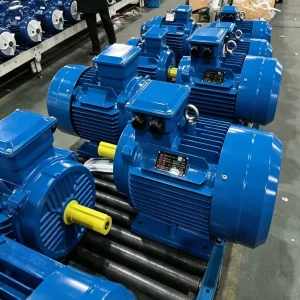
For industrial enterprises, the cost selection of an 18.5kW motor should not only consider the purchase price but also the overall cost-effectiveness throughout its entire lifecycle. While low-priced, standard models can reduce initial investment, they are energy-intensive, prone to failure, and incur high long-term maintenance, downtime losses, and electricity costs. High-efficiency, high-quality models have higher initial purchase costs, but their ultra-low energy consumption, stable operation, and extended lifespan allow for continuous reductions in production energy consumption and maintenance costs, enabling the price difference to be recovered through energy savings within 1-2 years. For core production lines operating under heavy loads and continuous operation, prioritizing high-efficiency standard brand models offers better cost-effectiveness. For low-frequency, short-duration auxiliary equipment, standard ordinary models can be selected to control costs, achieving a precise balance between performance and cost.
In summary, the price difference of YE3 series 18.5kW electric motors essentially reflects the value difference in materials and processes, energy efficiency technology, protective configurations, and brand services. This high-power motor, with its robust power performance, has become core equipment in medium- and heavy-duty industrial scenarios. Scientific cost comparison and selection strategies are key to cost reduction and efficiency improvement for enterprises. In the trend of refined industrial operations, abandoning the mindset of simply purchasing at the lowest price and matching the appropriate level of 18.5kW electric motor to actual working conditions is essential to truly leverage the performance advantages of high-power equipment and achieve the optimal balance between equipment value and production costs.