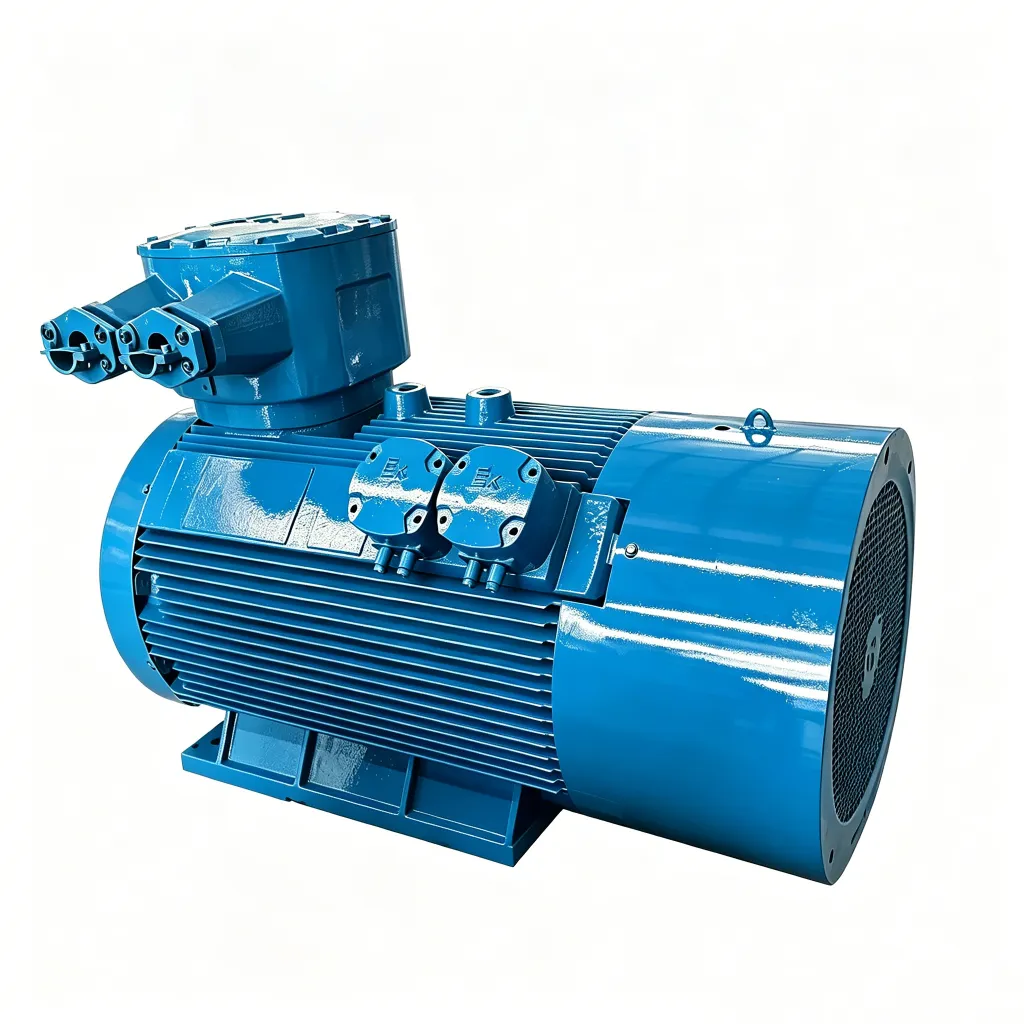
Difference between ATEX explosion proof electric motors and general-purpose motors
The core differences between ATEX explosion proof electric motors and general-purpose three-phase asynchronous motors lie in their structural design and safety protection, with completely different applicable scenarios and operating standards. General-purpose three-phase asynchronous squirrel-cage motors are designed for ordinary working conditions under normal pressure and without flammable or explosive media. Their simple structure only meets basic power output requirements and lacks explosion-proof protection. During operation, they are prone to generating electric arcs, sparks, and high surface temperatures, making them unsuitable for hazardous environments.
ATEX explosion-proof electric motors have undergone specialized structural upgrades according to the EU ATEX explosion-proof directive: the motor body uses a high-strength, sealed explosion-proof housing to isolate internal explosion pressure and flame leakage; the junction box uses a sealed explosion-proof structure to prevent ignition sparks at the wiring points. Simultaneously, the rotor and stator processes have been optimized to reduce operating friction sparks and temperature rise, strictly controlling the maximum surface temperature of the equipment.
Furthermore, ATEX explosion proof motors have standardized explosion-proof clearances, specialized protection levels, and temperature classification structures, and all components have undergone explosion-proof compatibility testing. Ordinary motors have no explosion-proof design and are only suitable for ordinary factories; while ATEX electric motors, with their exclusive explosion-proof structure, can be safely adapted to flammable and explosive working conditions such as chemical and oil and gas environments, eliminating the risk of explosion.